VR Balance
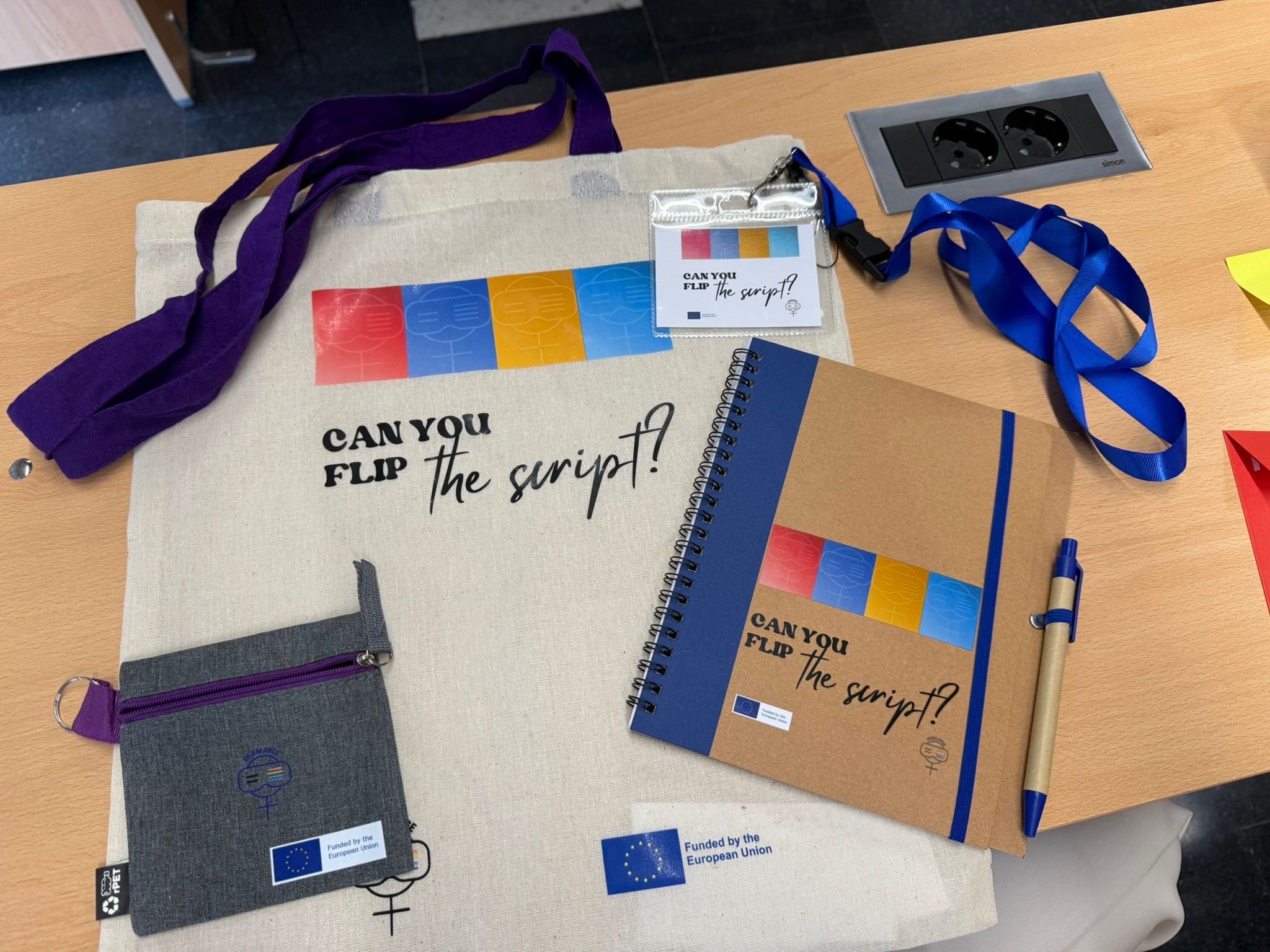
VR Balance: training gender equality by living it in first person
EU-funded project · Gender equality training in virtual reality
- 3
- workshops
- 6
- scenarios
- 5 h
- training
The context
A European project that turns equality into a lived experience
VR Balance is a training initiative co-funded by the European Union that uses virtual reality to teach gender equality through direct experience rather than slides and statistics. Instead of explaining inequality, it lets people feel what it is like to be on the receiving end of it.
The project is coordinated by the University of Barcelona, with MetaMedicsVR as the virtual reality and artificial intelligence partner, alongside the Social Innovation Fund and the Women Entrepreneurship Foundation as training experts. Together they brought academic research, social expertise, and immersive technology into a single programme.
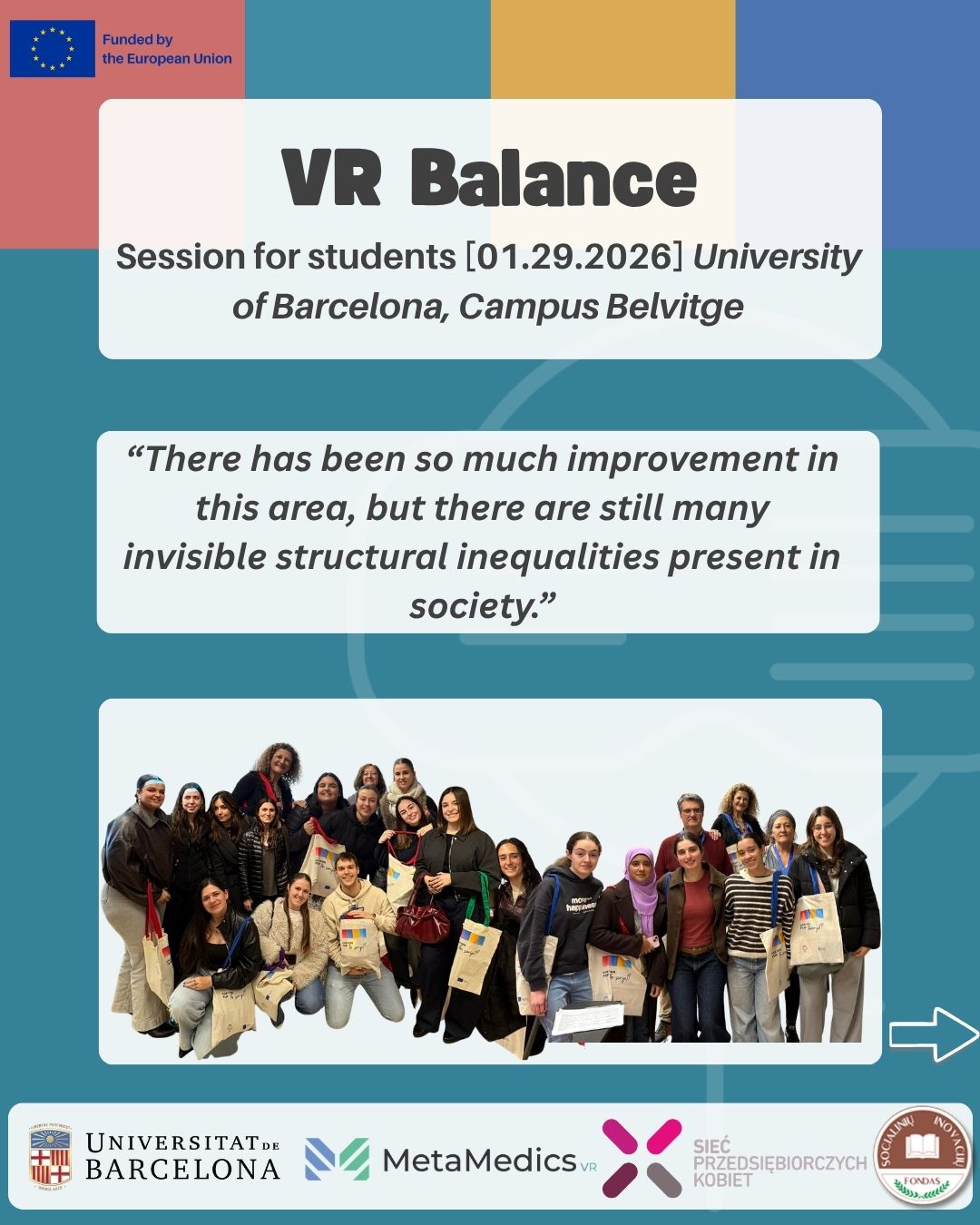
It is designed for people who shape decisions and culture: business leaders, human resources teams, students, young professionals, educators, policymakers, and non-profit organisations. No previous experience with virtual reality is needed to take part.
The challenge
Everyone agrees on equality. Few people feel the gap.
Gender inequality rarely shows up as a single dramatic event. It builds up through small, everyday moments: who is expected to handle the household, who gets asked about their plans to have children in a job interview, who is quietly passed over for a promotion. Each one seems minor on its own, and that is exactly why it is so easy to overlook.
The numbers across Europe show how persistent these patterns are:
- On average across the EU, women earned about 11% less per hour than men in 2024 (Eurostat).
- Across 23 European countries, women do roughly 86% more unpaid work at home than men — nearly double (Euronews, drawing on European time-use data).
- In most European countries, women still spend far more time on daily housework than men, and routine chores make up the single largest share of that unpaid work (European Institute for Gender Equality).
The challenge is not convincing people that these gaps exist. It is helping them genuinely feel the weight of them — the kind of understanding that changes how a manager hires, how a team shares the load, or how a policy is written.
What we built
Three workshops and six true-to-life scenarios in virtual reality
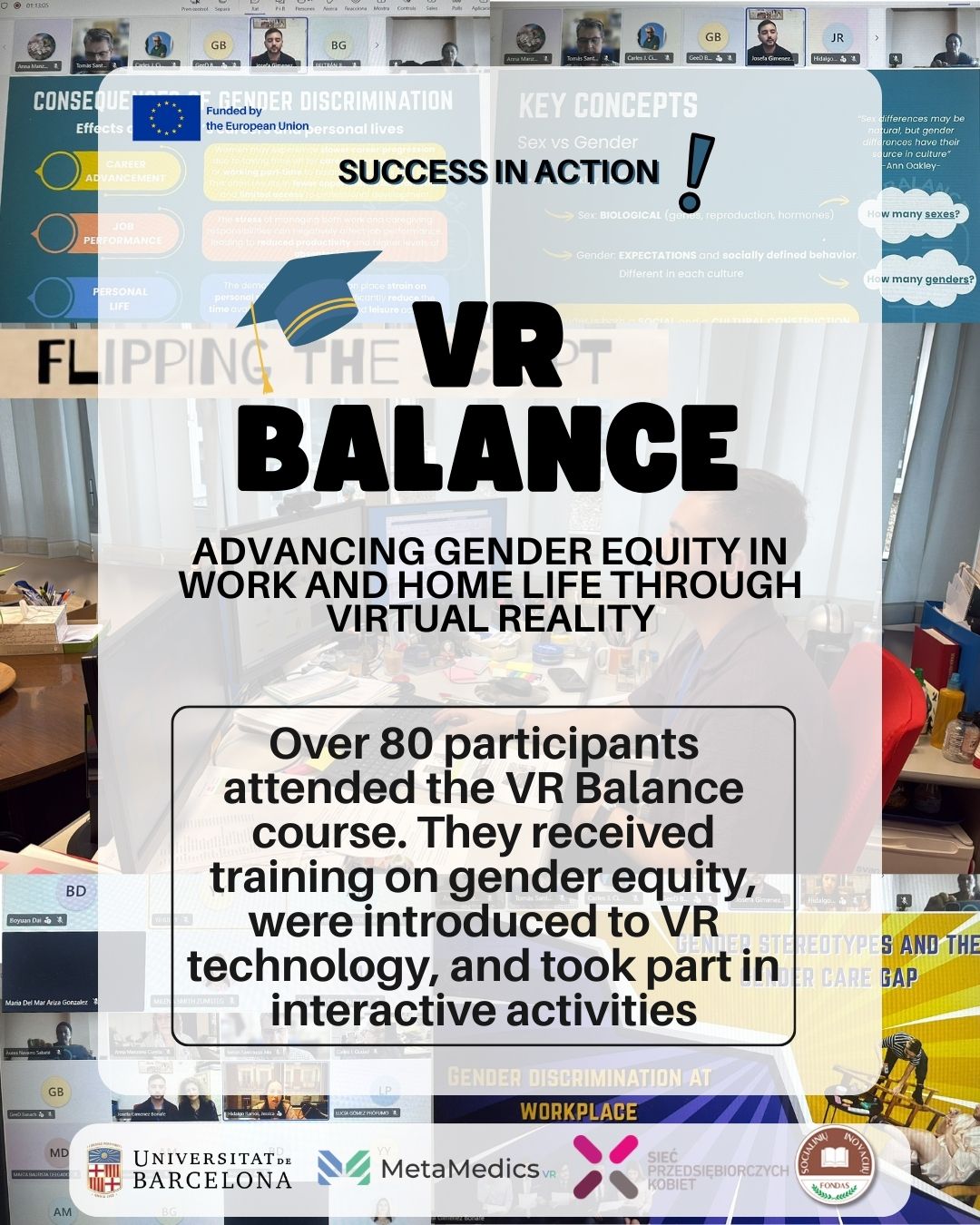
MetaMedicsVR built custom virtual reality scenarios designed together with the partners and grounded in the real experiences of working parents, students, and professionals. The result is a five-hour, in-person programme made up of three connected workshops:
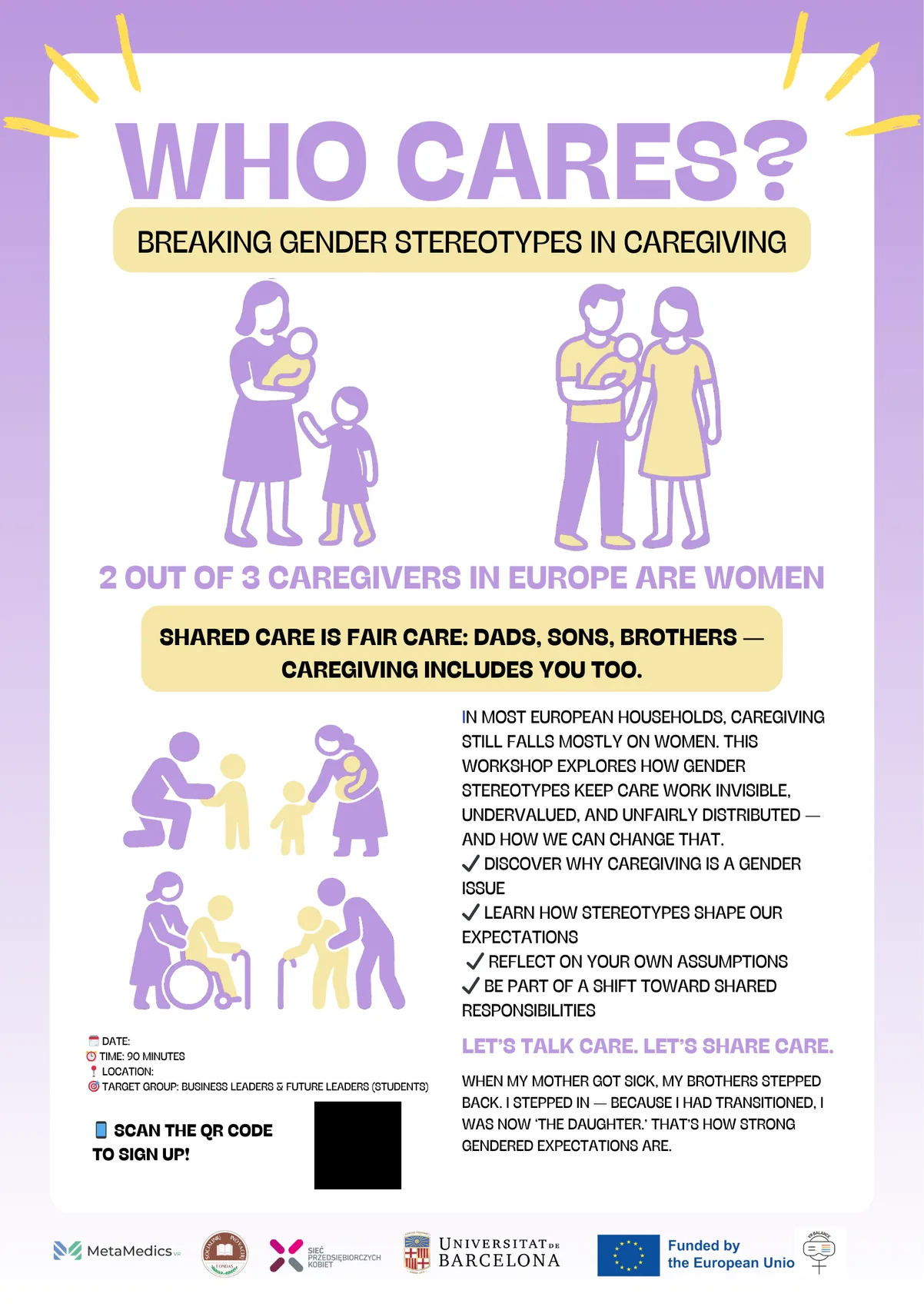
- Who Cares? The Care Gap — looks at how caregiving and housework are shared unequally, and what that costs over a lifetime.
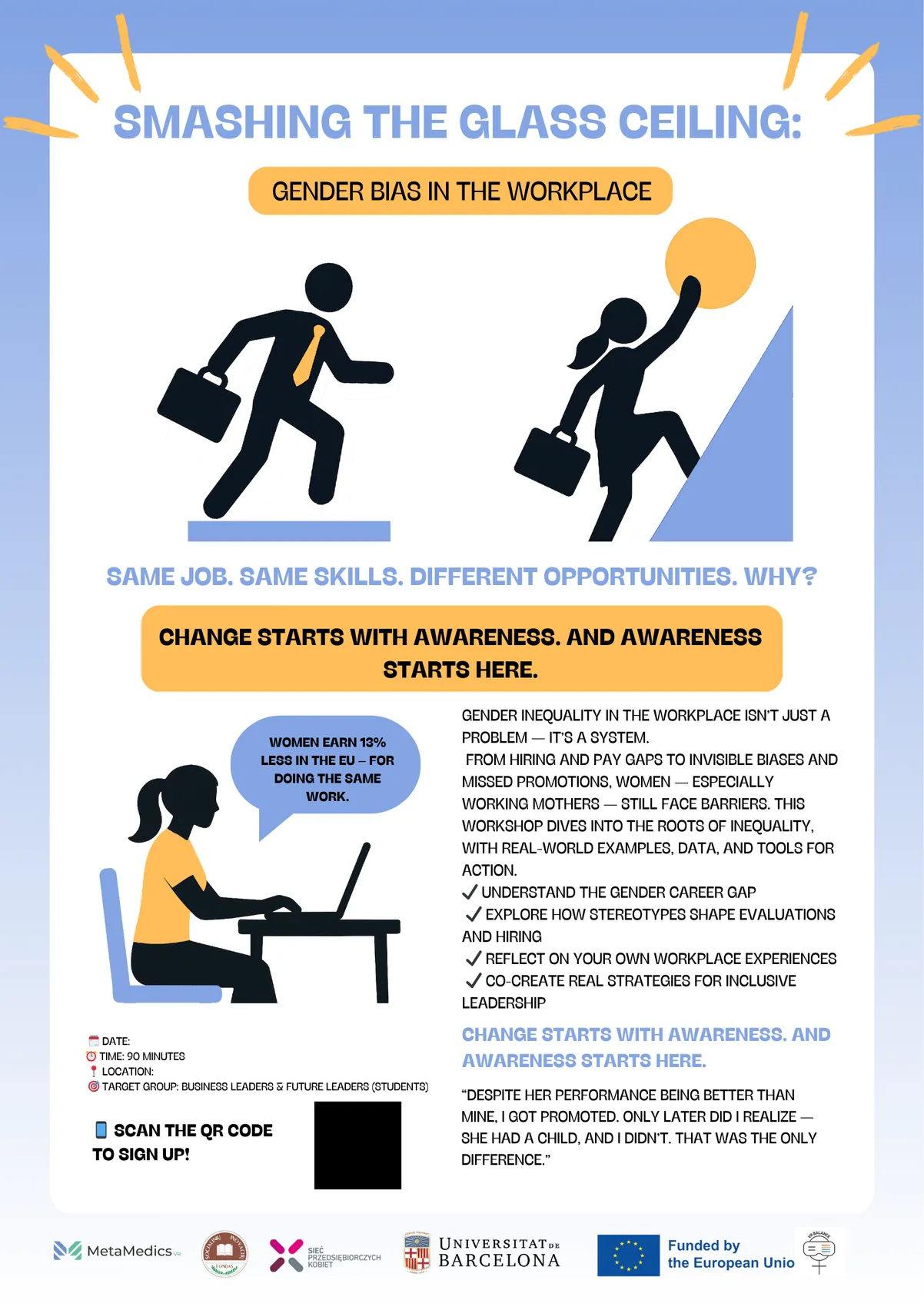
- Smashing the Ceiling — explores the bias women face at work and the pay and promotion gaps that hold careers back.
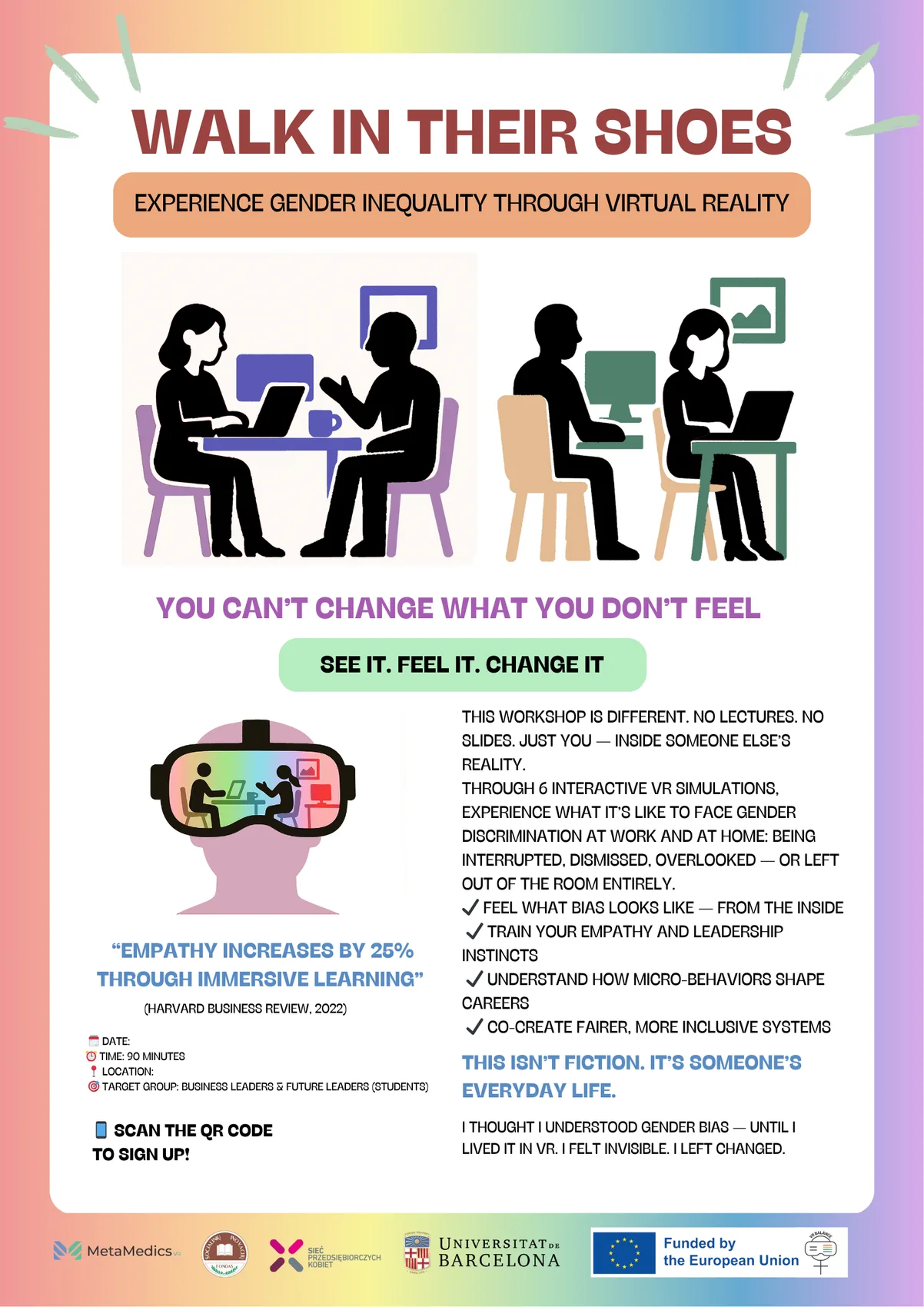
- Walk in Their Shoes — puts participants inside six virtual reality scenarios of everyday discrimination, seen from the first-person point of view.
The six scenarios are drawn from situations many people recognise but rarely sit with: a woman questioned about having children at work, a promotion denied because of a pregnancy, the unequal split of chores at home, the discrimination faced by a transgender employee in a customer-facing role, the adversity met by a non-binary person, and the slow build-up of everyday biases over a single day.
How it works
From a moment of empathy to a concrete plan of action
Each session follows the same rhythm. Participants step into a scenario in virtual reality and experience it from the inside, as if it were happening to them. They then come back to the room to talk through what they felt, supported by facilitators and grounded in research. Finally, the group turns that insight into something practical they can take back to their organisation.
This is what makes virtual reality the right tool for the job. Reading about a biased comment is one thing; standing in the room and hearing it directed at you is another. Research on perspective-taking in virtual reality has linked these first-person experiences to greater empathy and shifts in attitude toward groups people do not belong to — the very change the programme is built to spark.
You can't change what you don't feel. With VR, we make you feel it.
Why it matters
Decisions made with empathy reach further than any briefing
VR Balance is built for the people whose choices ripple outward — the manager deciding who to promote, the human resources lead writing a parental-leave policy, the educator shaping how the next generation thinks about work and care. When those decisions are made by people who have felt the gap rather than only read about it, equality stops being a poster on the wall and starts showing up in everyday practice.
By combining European research, social expertise, and immersive technology, the project shows what becomes possible when the right partners build together. For MetaMedicsVR, it is proof that virtual reality belongs not only in clinical training but anywhere understanding another person's experience can change an outcome.
If you recognise your own situation here, let's talk about how it could work for you.
GET STARTED
See what the next generation of healthcare training looks like.
Whether you run a faculty, a residency program, a clinical training department, or a continuing education operation — a 20-minute demo, tailored to your context, is the fastest way to know if this fits.
Thanks — we’ve got your request.
We’ll be in touch within one business day.